What actually happens to old phones in India — and why reuse beats recycling
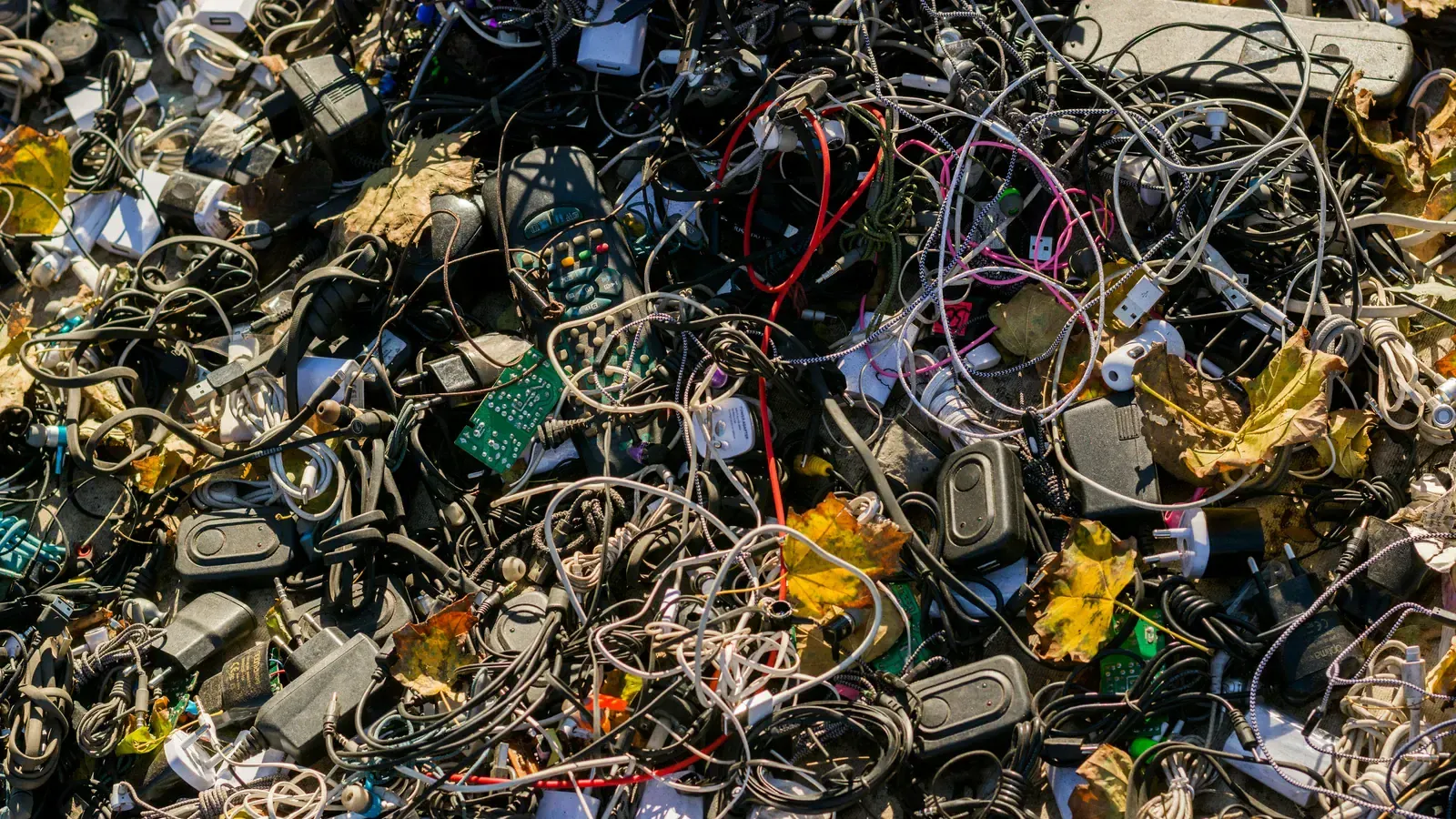
Recycling a phone is the second-best outcome, not the best one. Here's the real scale of India's e-waste problem, and the science behind why keeping a device in use beats breaking it down for parts.
India generated about 14.1 lakh tonnes of e-waste in 2025-26, according to figures the Environment Ministry gave the Lok Sabha — up from 12.5 lakh tonnes just two years before. Around 9.8 lakh tonnes of that was recycled through a tracked, registered channel. The gap between those two numbers is real, and it's worth understanding both where it goes and why "recycled" isn't actually the best outcome available for a phone that still works.
The scale of it
Government figures show e-waste generation climbing every year on record: about 12.5 lakh tonnes in 2023-24, 14.0 lakh tonnes in 2024-25, 14.1 lakh tonnes in 2025-26. The tracked recycling volume has grown too, but not enough to close the gap — millions of tonnes a year still move outside any registered channel.
India's regulatory response is the E-Waste (Management) Rules, 2022, in force since April 2023, which put an Extended Producer Responsibility regime in place: manufacturers, producers, refurbishers, dismantlers and recyclers of specified electronics all register with the Central Pollution Control Board, and producers are required to meet recycling targets. It's a real, structured framework — but a rule only reaches the waste that flows through the system it governs.
What happens to the rest of it
Researchers have long estimated that most e-waste outside the tracked system reaches India's informal recycling sector — small operations, often unlicensed, that recover copper, gold and other materials by hand. The World Health Organization has documented what that process actually releases: lead, mercury, cadmium and dioxins, from methods like open burning and acid stripping. Studies of workers in informal e-waste hubs — Delhi's Seelampur among them — have found real, measurable exposure and health effects: skin and respiratory problems, and in nearby soil and water, heavy metal contamination that persists.
None of this is about any single seller or platform doing something wrong. It's what happens, structurally, to a large share of a fast-growing waste stream once it leaves a device's first owner without a clear next step.
Why recycling isn't actually the best answer
Even done properly, through a registered recycler, recycling a phone is the second-best outcome — not the best one. Independent lifecycle studies consistently find that manufacturing accounts for 80 to 90 percent of a smartphone's total carbon footprint, with commonly cited figures putting the manufacturing stage alone at 40 to 80 kg of CO2 per device. Recycling recovers some of the material in a phone that's reached the end of its life. It does nothing about the fact that whoever needs a phone next still needs one manufactured for them — mining, fabrication, assembly, shipping, the full footprint, repeated.
Reuse is what actually avoids that. A phone that gets refurbished and resold means one fewer phone has to be manufactured from scratch for its next owner. That's not a marginal difference — it's most of the phone's entire environmental cost, avoided rather than repeated.
What that means for what TurnCash does
Every device TurnCash collects gets refurbished and resold, not broken down for parts — stated as a standing policy on our About page, not something written for this post. That's a deliberate choice of business model, not a recycling program: a device that's still refurbishable is worth more to the world back in use than dismantled for its materials, for exactly the reasons above.
It also means TurnCash isn't a waste-management or recycling operation, and doesn't claim to be one. What it can say plainly is where a device goes after pickup — back out into use — and why that's the outcome the actual science says matters most.
Get a price for your device
A price in about a minute, free doorstep pickup in a two-hour slot, and UPI before our agent leaves.
Questions people ask
- How much e-waste does India actually generate?
- About 14.1 lakh tonnes in 2025-26, according to figures the Environment Ministry gave Parliament — up from 12.5 lakh tonnes in 2023-24. Roughly 9.8 lakh tonnes of that was recycled through a tracked channel, which leaves a real, large gap that goes somewhere else.
- What happens to the e-waste that isn't recycled through a tracked channel?
- Researchers have long estimated that most of it reaches India's informal recycling sector — small-scale, often unlicensed operations that recover metals by methods the WHO has documented as releasing lead, mercury, cadmium and dioxins, with real, studied health costs for the workers doing it and the soil and water around them.
- Isn't recycling a phone the responsible thing to do?
- It's better than a landfill, but it's not the best available option. Studies consistently put manufacturing at 80-90% of a phone's total lifecycle emissions — commonly cited figures range from 40 to 80 kg of CO2 per device. Recycling recovers some material, but someone still has to manufacture a whole new phone to replace the one just broken down. Reselling a phone so it stays in use is what actually avoids that manufacturing footprint being repeated.
- What does TurnCash actually do with the phones it collects?
- Refurbishes and resells them — stated on our About page as a standing policy, not something written for this post. The whole business only works if a device goes back out into use, not into parts.
- Does that mean TurnCash is a recycler?
- No — a recycler dismantles a device for materials. TurnCash's model is reuse: get a working device back into someone else's hands, which is the higher-impact outcome of the two, for the reasons above.